

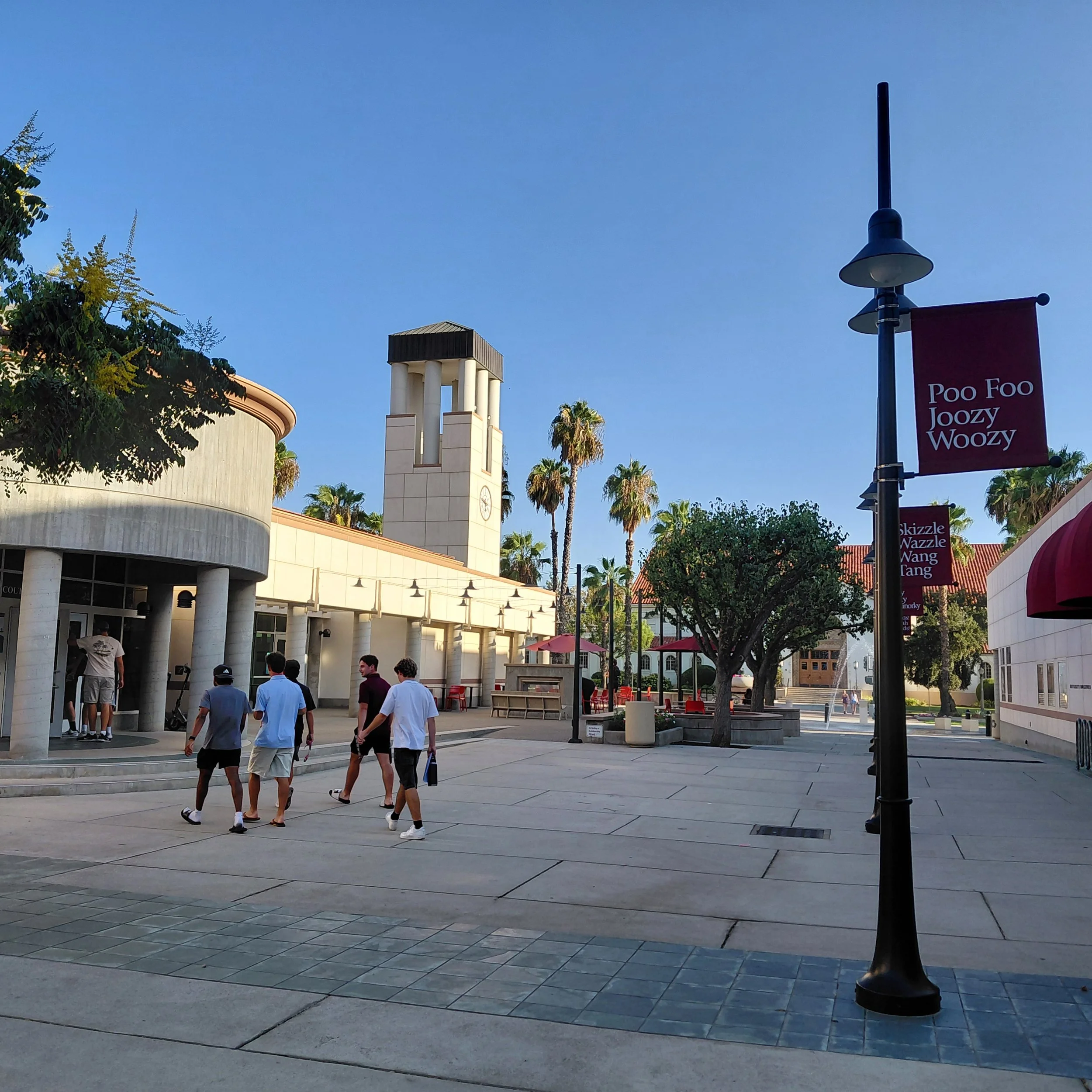
Photo by David James Heiss
The university commons convenes at the entrances to the university’s bookstore, library, eating facilities and student life programs.
By David James Heiss
Redlands News Collective
REDLANDS — Natalie Portillo did not know much about the University of Redlands until a representative visited her high school counseling center.
When she discovered that Redlands offered a pre-law program, her interest was piqued. And once the university offered her a substantial financial aid package, she became one of 561 first-year students at the university this fall — marking the largest entering class since 2019 and the second largest applicant pool in the institution's history, according to Kevin Dyerly, vice president of enrollment.
Portillo, a Hesperia resident who was involved in her school’s mock trial program, had considered other institutions, including Pepperdine University, the University of California, Riverside, and California State University, San Bernardino. However, she anticipated having to pay significantly more out-of-pocket to attend those campuses. She is the first in her family to attend a four-year university.
“I visited four times in recent months. It’s a beautiful campus with calming, pleasing architecture,” Portillo said, adding that the environment should help her focus on public policy and political science studies as she prepares for a career as a defense attorney.
Gissele Soto, another first-generation college student from Orange County, learned about the university through her elementary school principal, Connie Smith, a Redlands alumna. Soto, who served as captain of the Orange High School volleyball team, chose Redlands over the University of California, Santa Cruz. She hopes to try out for the Bulldogs' volleyball team while majoring in psychology.
“Redlands had better internships, programs, and scholarships,” Soto said. “Principal Smith personally reached out to me and two other students. She believed there was something great in us to accomplish in college, so she personally took us to Redlands, and that’s how I got to know the university.”
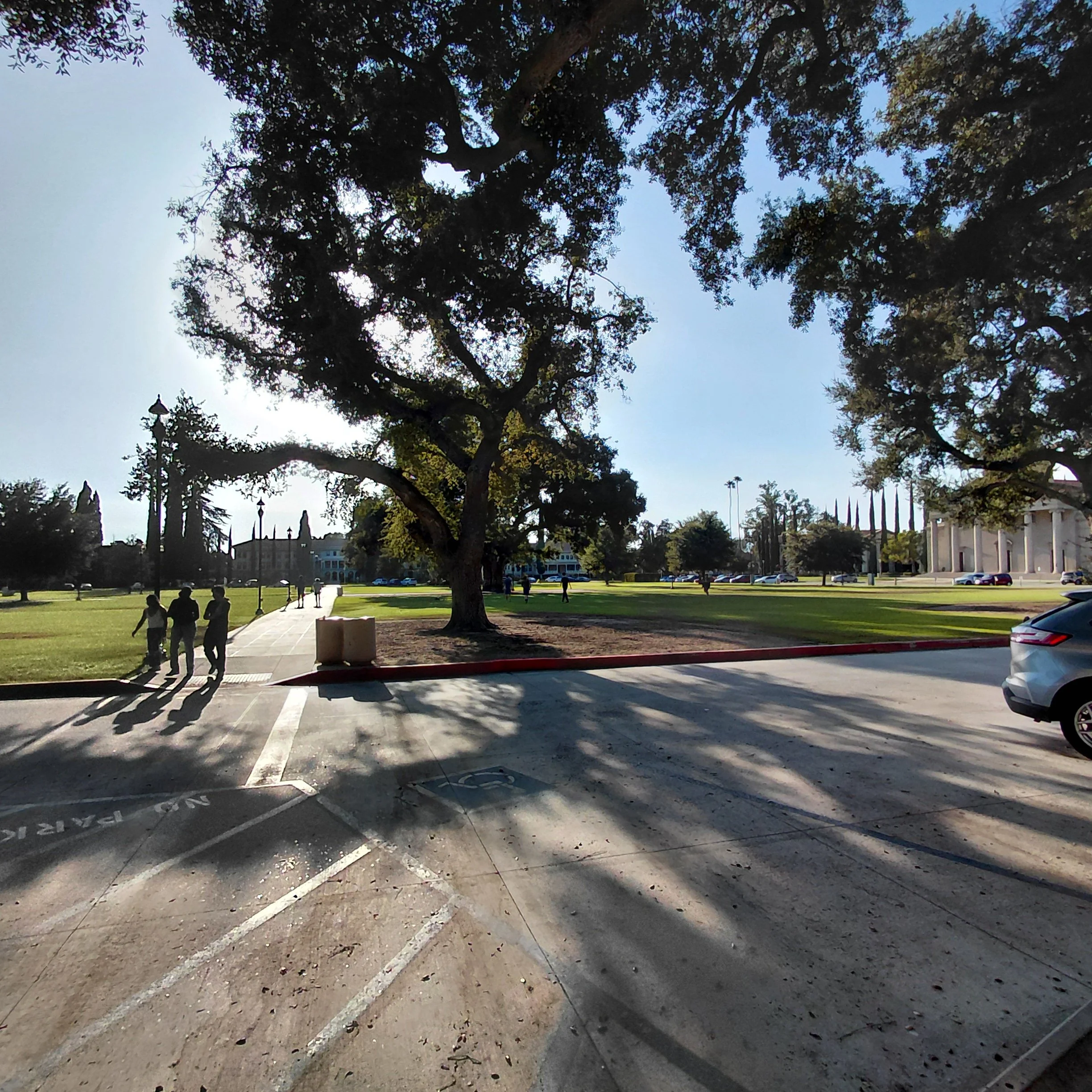
Photo by David James Heiss
Students traverse the quad at the center of campus.
Approximately half of the Class of 2030 are first-generation college students, according to Dyerly. While incoming students hail from 26 states, the largest populations come from California, Washington, Oregon, Colorado, and Hawaii. Women account for 57 percent of the incoming class, and 20 percent of the students arrive from outside California. Athletics also proved to be a major factor, with 221 recruited student-athletes joining the class.
Katelyn Wallace, of Beaverton, Oregon, was fortunate enough to “stumble across it” while researching schools. “I emailed the coaches, and they invited me out for a visit. I loved it,” said Wallace, who is playing soccer for Redlands as she considers studying business management and education.
A choice was narrowed down to either attending California Polytechnic University, San Luis Obispo, and not playing soccer, or taking the chance to work with “the supportive coaching staff and team” at Redlands, where she could play and still find balance between school, clubs, and the opportunity to study abroad.
At a time when colleges nationwide face declining enrollment and campus closures, Redlands has bucked the trend. The National Student Clearinghouse — a national educational nonprofit that tracks enrollment records for 97 percent of U.S. colleges — reported last January that undergraduate enrollment at private four-year universities had fallen by 1.6 percent nationwide.
“Redlands has focused on making sure our academic programs continue to reflect what students and employers need today and in the future,” Dyerly said. “We’ve developed new programs in areas such as data science and kinesiology, expanded our offerings in Geographic Information Systems, and added new bachelor’s and executive master’s programs. We’re also incorporating emerging technologies, including virtual and augmented reality, into the student learning experience.”
Dyerly added that hands-on learning remains central to the university's mission.
“Through our Core Four experiences, which include study abroad, research, community service, and internships, students have opportunities to apply what they’re learning in the classroom to real-world experiences and career opportunities,” Dyerly said.
Wallace seems thrilled with her choice in attending U of R.
“I love the campus, to just walk around — it’s so beautiful. It’s spread out, but very walkable. The buildings are super unique, which adds character. Everyone is friendly, and there are plenty of food choices that are delicious. Overall, I’m very happy with my choice,” Wallace said.