

By David James Heiss
Redlands News Collective
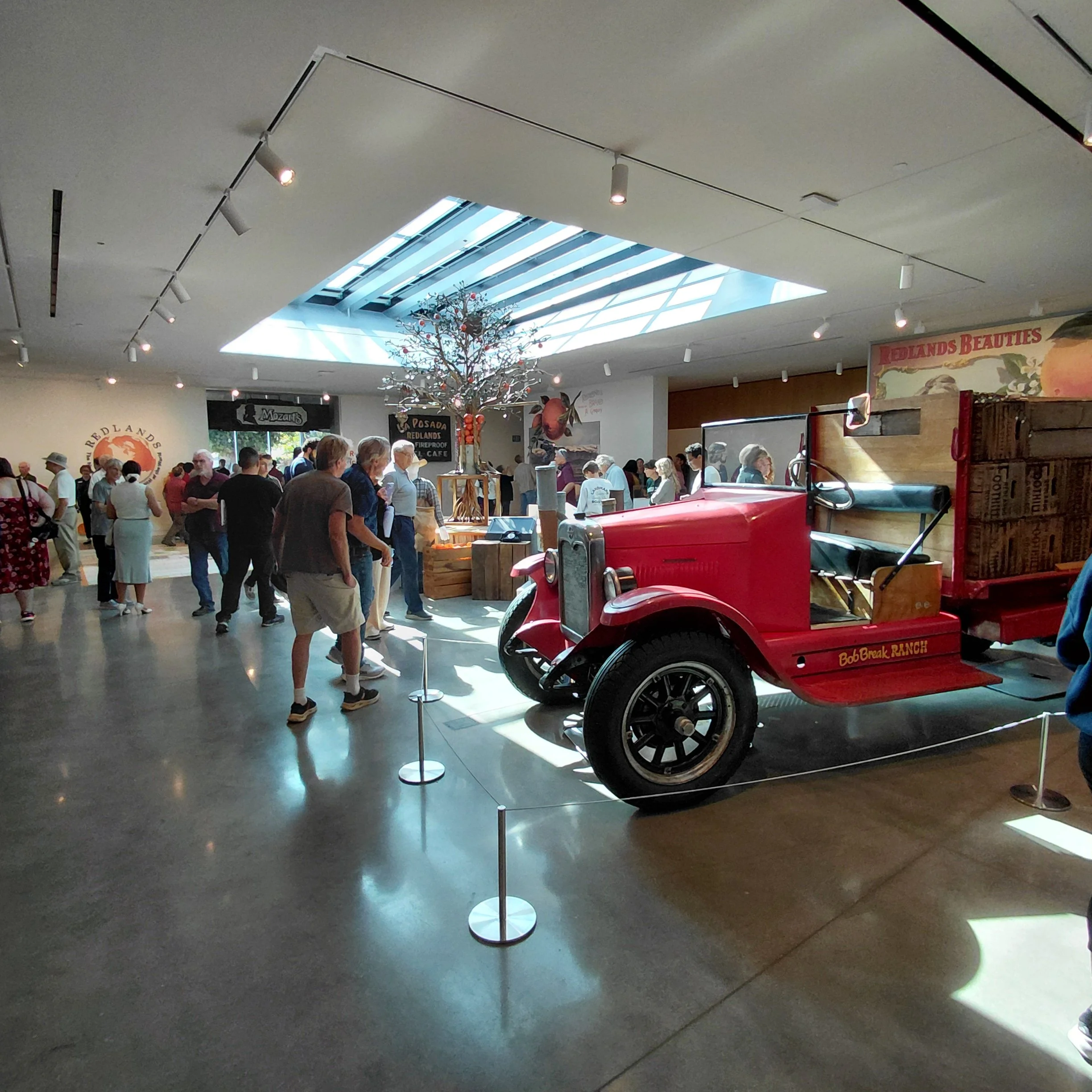
Photos by David James Heiss
The museum took extra precautions to protect sensitive displays from natural sunlight, which can fade or degrade historical artifacts over time, museum planners have said.
REDLANDS — In a building that once recorded history on a daily basis, the Museum of Redlands opened Oct. 24 in the former Redlands Daily Facts building following more than a quarter century of planning.
The museum, located at the corner of Brookside Avenue and Center Street, attracted a few hundred visitors who arrived to check out inaugural exhibits highlighting local history, ranging from the former Oriental Avenue neighborhood to growing archives depicting the city's citrus heritage.
The opening ceremony included remarks from dignitaries, including Mayor Mario Saucedo, Sen. Eloise Gomez Reyes, library board President Bill Hatfield, and Jim Favaro, principal of Culver City-based architectural firm Johnson Favaro, interspersed with musical interludes from the Redlands 4th of July Band.
A.K. Smiley Public Library Director Don McCue, who oversees operations for the Museum of Redlands, opened the ceremony by reflecting on the lengthy journey that began in 1998 with Liz Beguelin and Nelda Stuck, a former editor who once worked in the building.
The duo pitched the idea of a municipal history museum to the city council and helped establish the nonprofit Redlands Historical Museum Association to raise funds for the facility.
McCue addressed early skepticism regarding the project.
"Some people asked, 'Why does Redlands need a museum?'" McCue said. "Perhaps Redlands doesn't need a museum, but in my admittedly biased view, a community of the quality of Redlands deserves a museum.
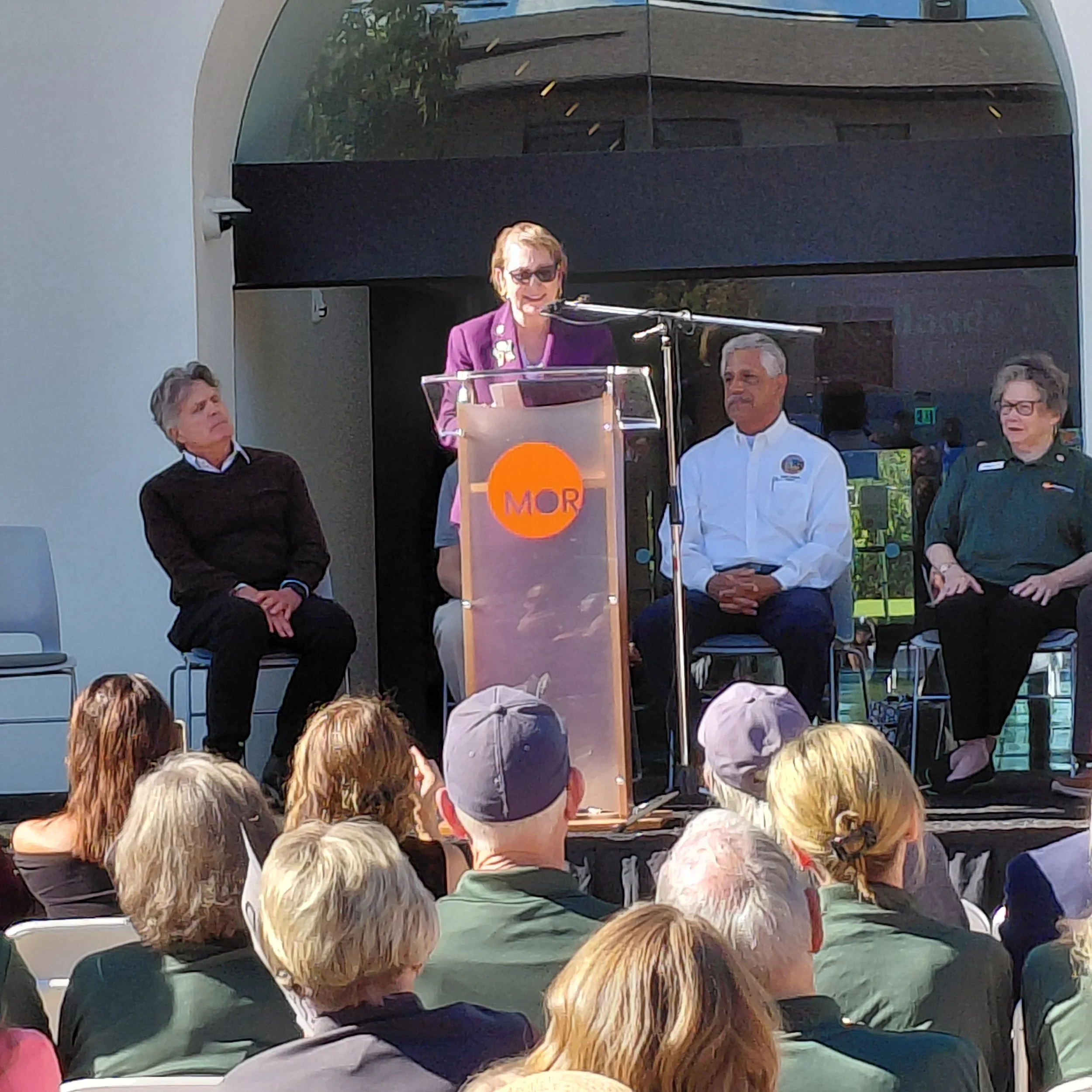
Guests gathered in the forecourt along Center Street for the grand opening. Here, Sen. Eloise Gomez Reyes delivers remarks. She is flanked by architect John Favaro on the left, and Mayor Mario Saucedo and Redlands Historical Museum Association President Char Burgess at right.
"Museums perform a crucial service for a community. Museums challenge our perspectives, deepen our empathy, and connect us to a narrative far grander and more intricate than our individual lives. In a world that often feels polarized and transient, museums offer anchors of continuity and spaces for shared experience. They remind us of our collective ingenuity, offer tangible links to our shared past, give us powerful insights into our present, and provide us imaginative glimpses into our future. Museums have been called the memory keepers and storytellers of a community, and Redlands has a lot of powerful stories to tell. One of the stories that we're going to be telling this morning is how this museum came to be. The public part of the public-private origin of the M.O.R. is the crucial role played by the city of Redlands."
Among those attending the ceremony was former Daily Facts columnist Penny Schwartz, who was curious how the newspaper building was transformed into the Museum of Redlands.
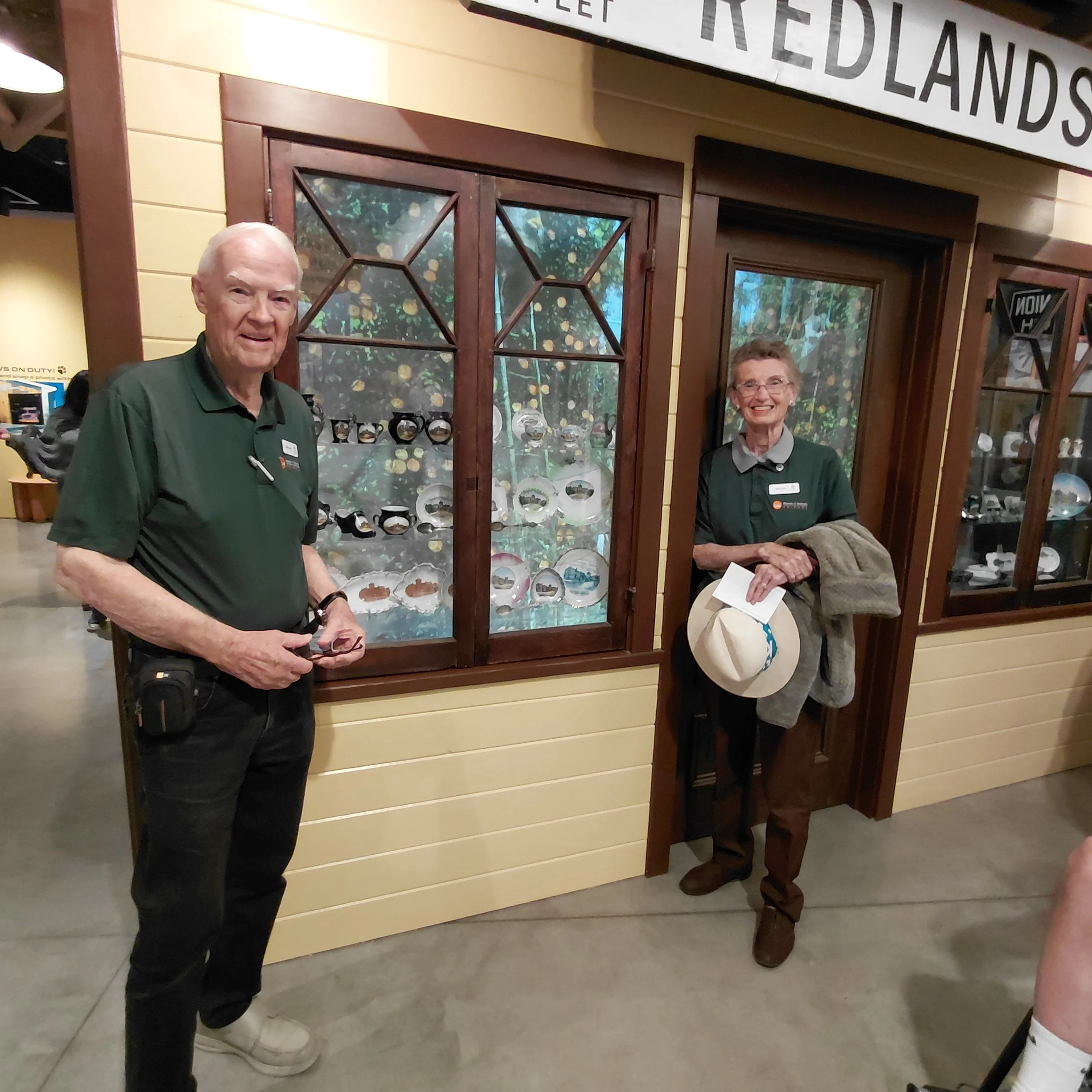
Museum co-founder Nelda Stuck (right) with her husband, Monte, in front of porcelain pieces the couple donated for display.
"The physical aspects of the building are totally transformed, but the mission of researching the truth and offering it to the public remains the same," Schwartz said. "It seems like the museum was destined to be located in the Facts building. I was delighted and overwhelmed with the amazing job Nathan (Gonzales) and Maria (Carillo Colato) did with the opening exhibits," referring to the library's curators and archivists who led the research, design, and installation of the museum's 13 inaugural displays.
Shari Scholte, a special education teacher from Beaumont, accompanied her daughter, Caroline, a Redlands resident, to the event.
"It was special to be there for the grand opening," Scholte said. "As one of the speakers said, we were part of a historical moment. We can't wait to go back and really spend some time exploring — there is so much to see."
In one display featuring a rotary-dial telephone inside a phone booth, visitors can dial to hear Redlands-themed songs recorded at the University of Redlands by Ethan Hebel and accompanied by pianist Hanako Duffie, including "Bungalo Girls," "Meet Me In Redlands," and the alma mater of San Bernardino Valley College — an institution governed by a board of trustees on which A.K. Smiley Public Library archivist Nathan Gonzales serves.
Docent Judith Hunt, who helped guide visitors through the Chinatown exhibit, noted the depth of the historical displays.
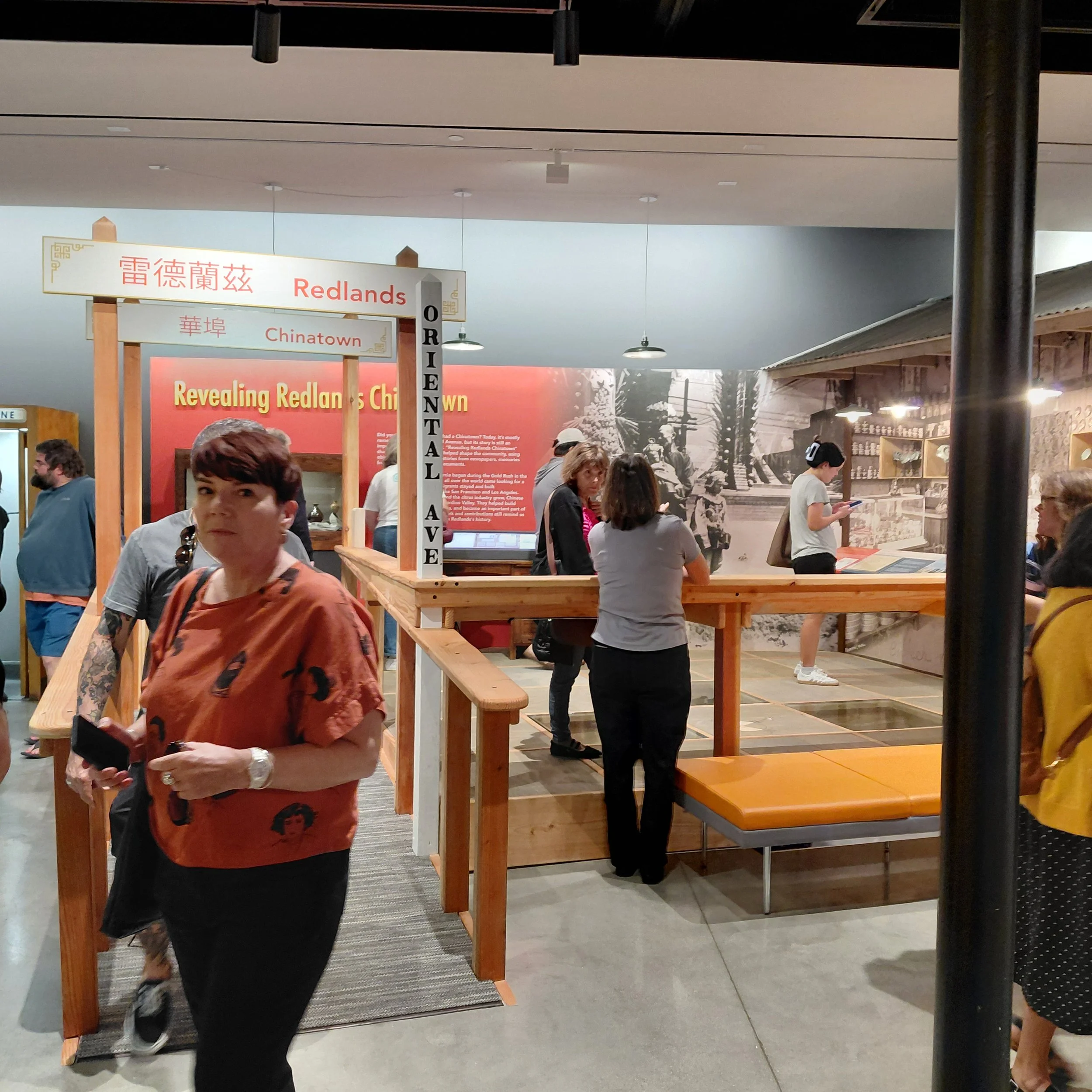
One exhibit pays tribute to the former Chinatown.
"One could spend a week just exploring and learning about that exhibit alone," Hunt said.
"In 1921, the city decided not to change the name of Oriental Avenue, which is the only thing that remains to acknowledge that part of the city's history," Hunt added, referring to an area near the center of town where the former Krikorian Theater was constructed.
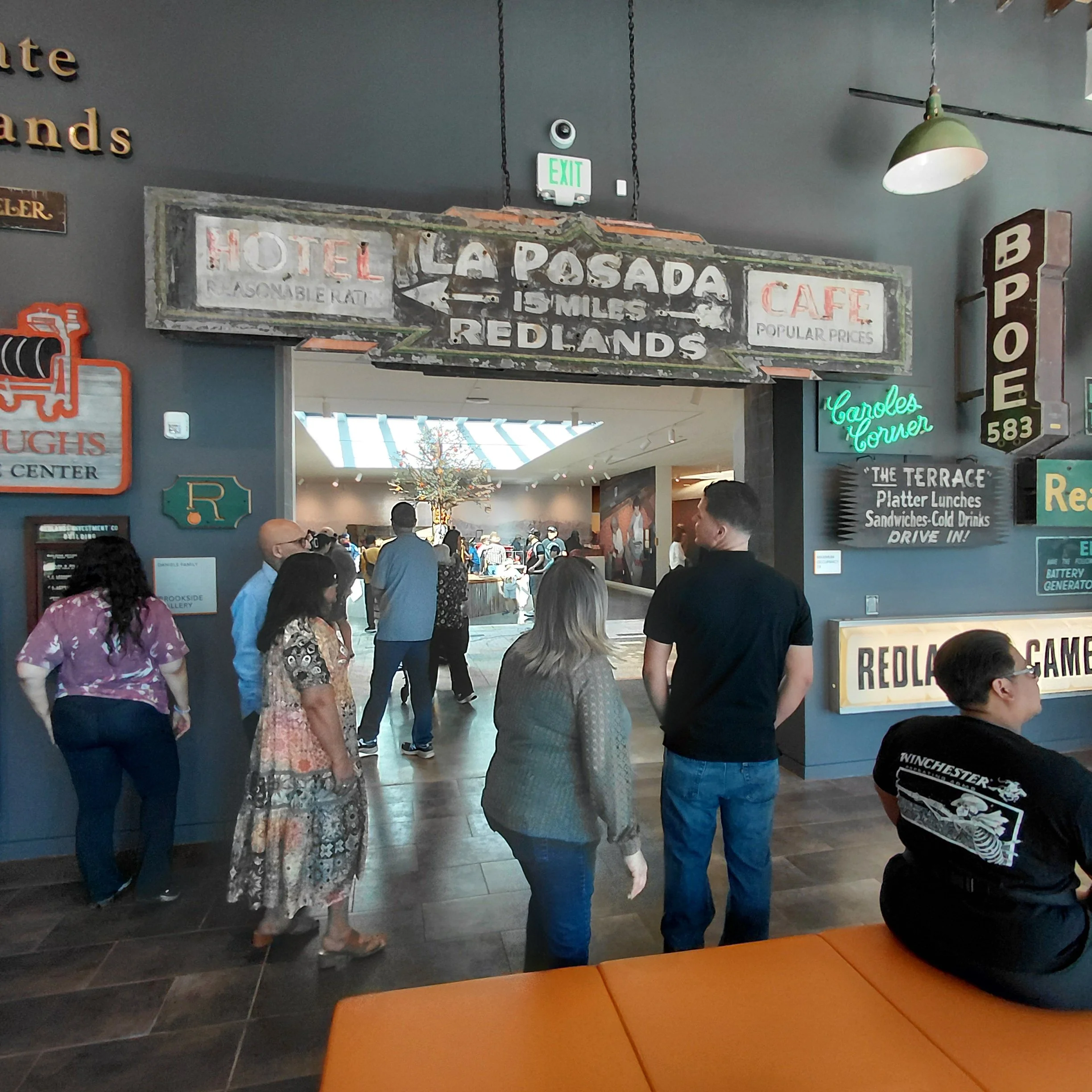
A display at the Museum of Redlands showcases dozens of historic commercial and municipal signs preserved over decades of local history.
Throughout the event, short films connected to or featuring Redlands were projected on a continuous loop in a designated viewing area. Additional historical displays included a 1936 Seagrave fire engine on loan from Redlands Professional Firefighters Association Local 1354.
The Museum of Redlands, located at 1 N. Center St., is open Wednesday through Sunday from 11 a.m. to 4 p.m. Information on current exhibits and visitor details can be explored at themor.org.