

Photos by David James Heiss
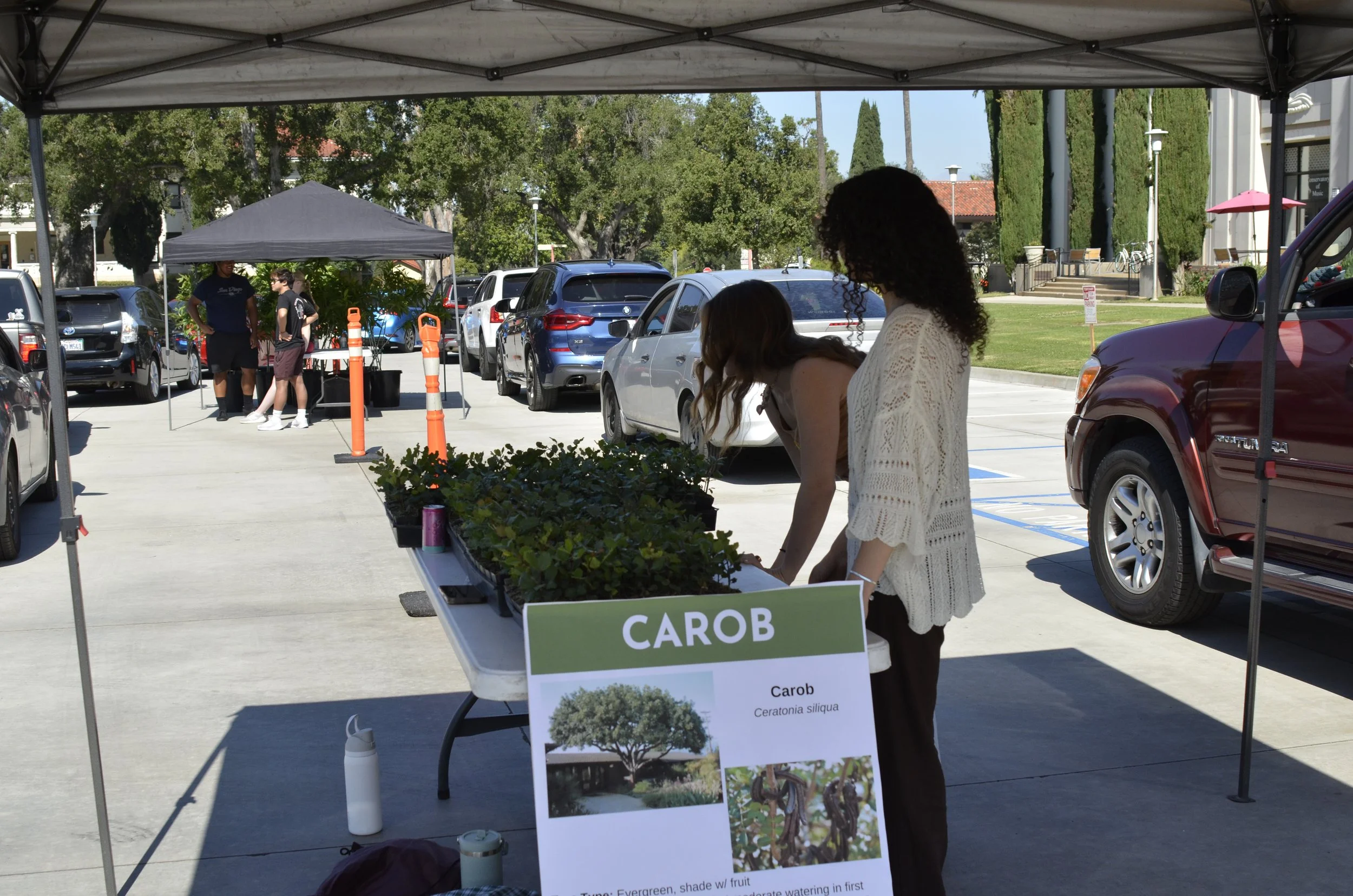
Visitors were given options to select a couple of seedlings or juvenile fruit trees, prioritized for visitors based on their neighborhood’s CaEnviroScreen score, reserved for those dwelling in areas most burdened by pollution and most vulnerable to its effects.
By David James Heiss
Redlands News Collective
REDLANDS, Calif. — Scores of vehicles snaked around the outskirts of the University of Redlands campus last Saturday morning, as hundreds of visitors hoped to take advantage of free trees offered during the sixth annual Mega May Tree Giveaway.
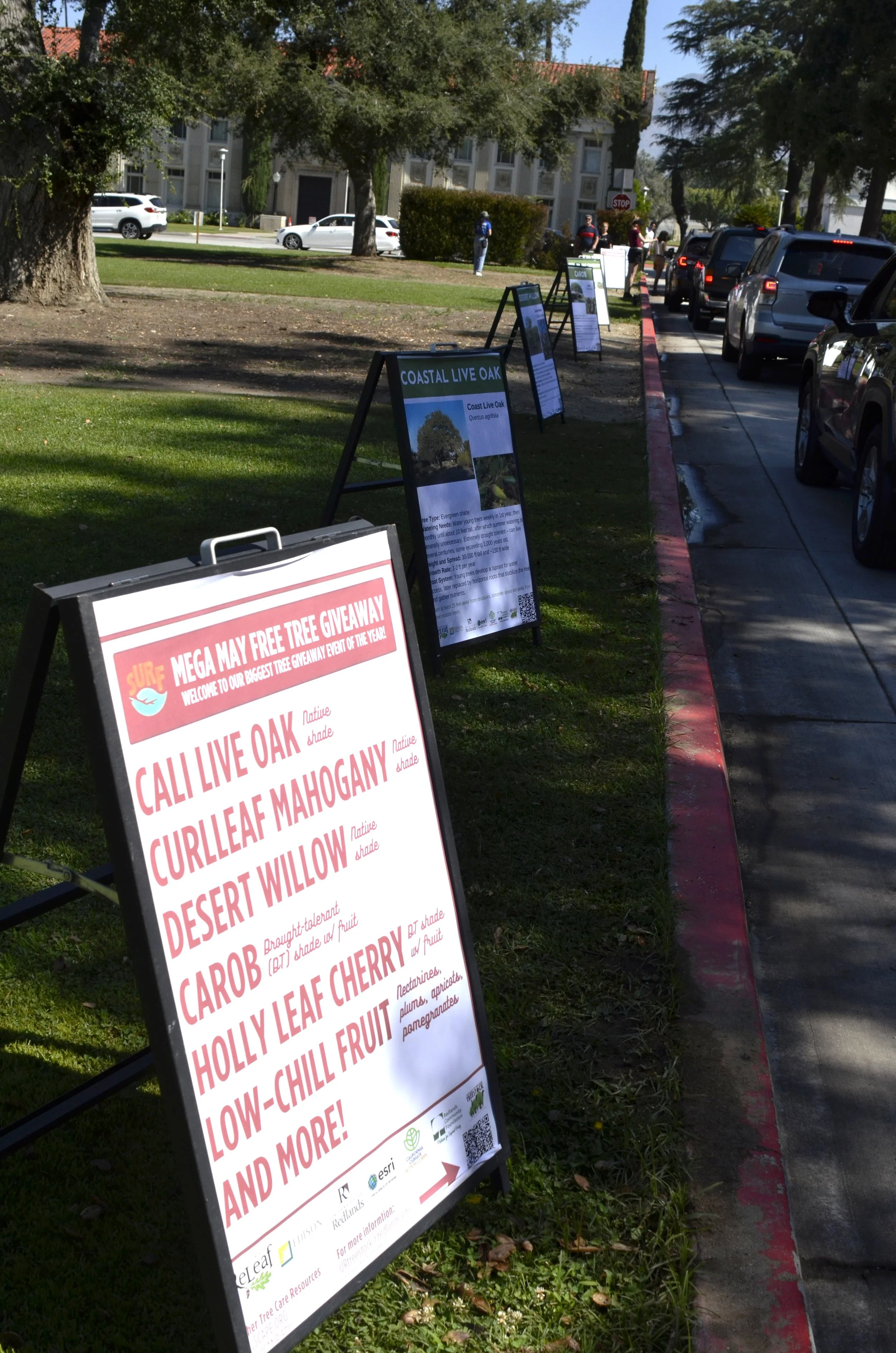
Drivers got to preview the Treestock varieties that were available on May 9.
The event, sponsored by the University of Redlands California Climate Action Corps (CCAC) fellows in partnership with Redlands-based Esri, far exceeded expectations. Typically, the university anticipates roughly 150 cars, or nearly 300 visitors, to drive through for a pair of complimentary saplings. Instead, the campus saw a massive surge in local interest.
“We served nearly 300 cars, or about 750 people, during the three-hour period leading up to noon,” said Erin Sanborn, assistant dean of experiential education and director of sustainable education. “We had to adjust our intake process to help streamline the steady flow of traffic. What a wonderful problem we encountered: tons of people excited about trees!”
The trees — selected through a vetting process with master gardeners from the University of California, Agriculture and Natural Resources — included nine species native to California or specifically chosen for their "climate-ready" and water-wise qualities.
Among the offerings were native shade providers like California live oaks, desert willows, and western redbuds, alongside low-chill fruit trees such as Panamint nectarines, Santa Rosa plums, and pomegranates. The giveaway also featured highly adapted, non-native species like carob, African sumac, and Chinese elm, which are known for their ability to thrive in the arid Inland Empire climate.
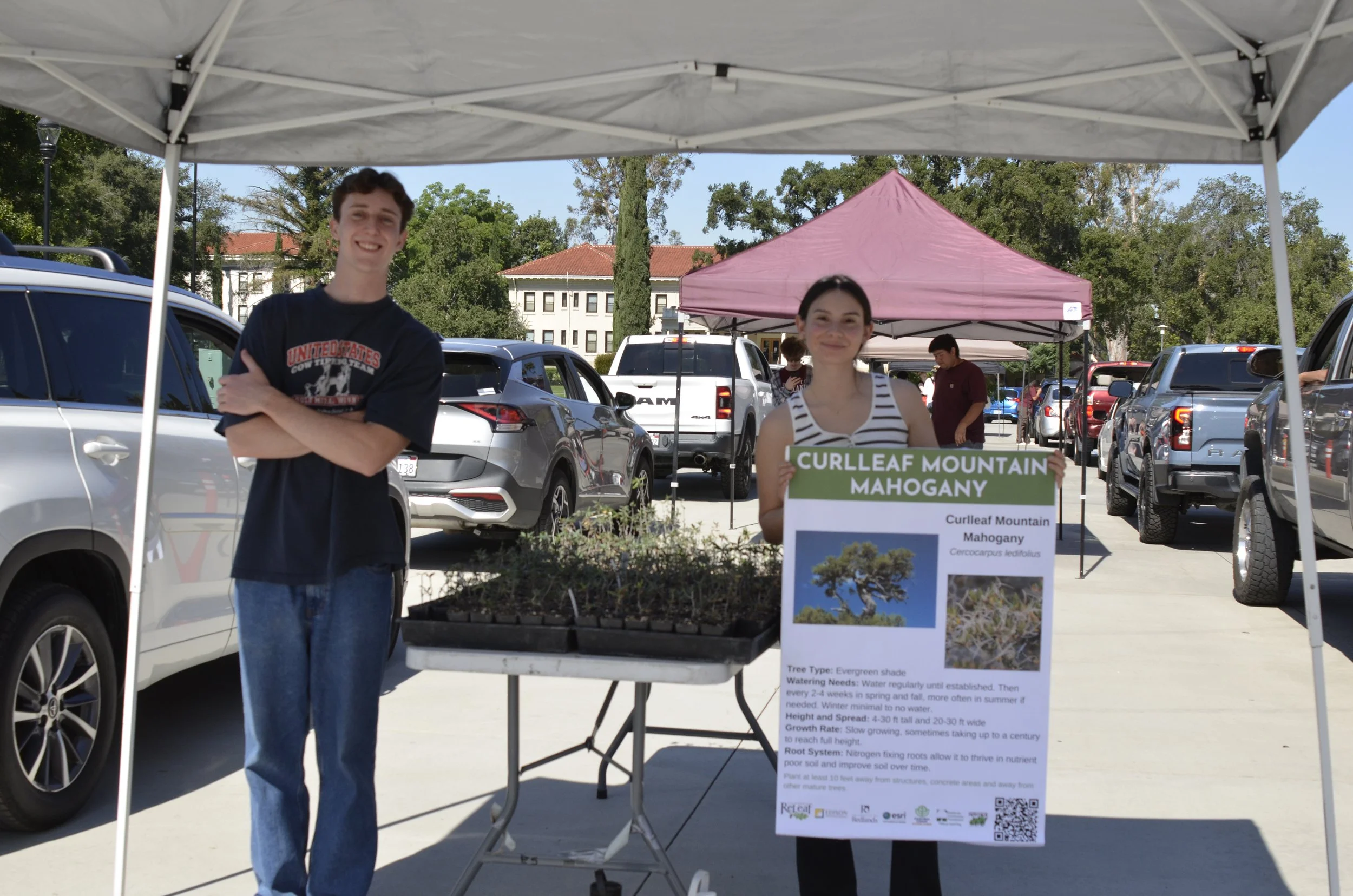
Volunteers Kade Grothem (left) and Graciela Jauregui help hand trees to visitors driving through in front of Memorial Chapel.
For those who missed the event, the Sustainable University of Redlands Farm (SURF) continues its mission to cool the region. The farm hosts "Second Saturday" giveaways at 1310 E. Lugonia Ave. from 11 a.m. to 1 p.m. These efforts are designed to help Redlands combat the urban heat island effect, a phenomenon where asphalt and buildings trap solar heat, leading to higher utility costs and increased strain on the power grid.
Daniel Gonzalez II, lead coordinator of SURF’s "Treestock: The Urban Greening" program, credited the record-breaking attendance to a strategic marketing push.
“This was a massive team effort from the staff and students working at SURF,” Gonzalez said. He noted that the team has been fine-tuning and recalibrating its outreach initiatives since September.
While the high volume created a brief period of chaos at the start, the team quickly pivoted.
“After restocking our highly demanded fruit trees and restructuring our event system, we were able to reorganize and enhance the manner in which attendees received their trees,” Gonzalez said. “This wouldn’t have been possible without the efforts of our SURF team, the resident CCAC fellows, and student volunteers. We appreciate the cooperation from the community for making this a very successful event.”