

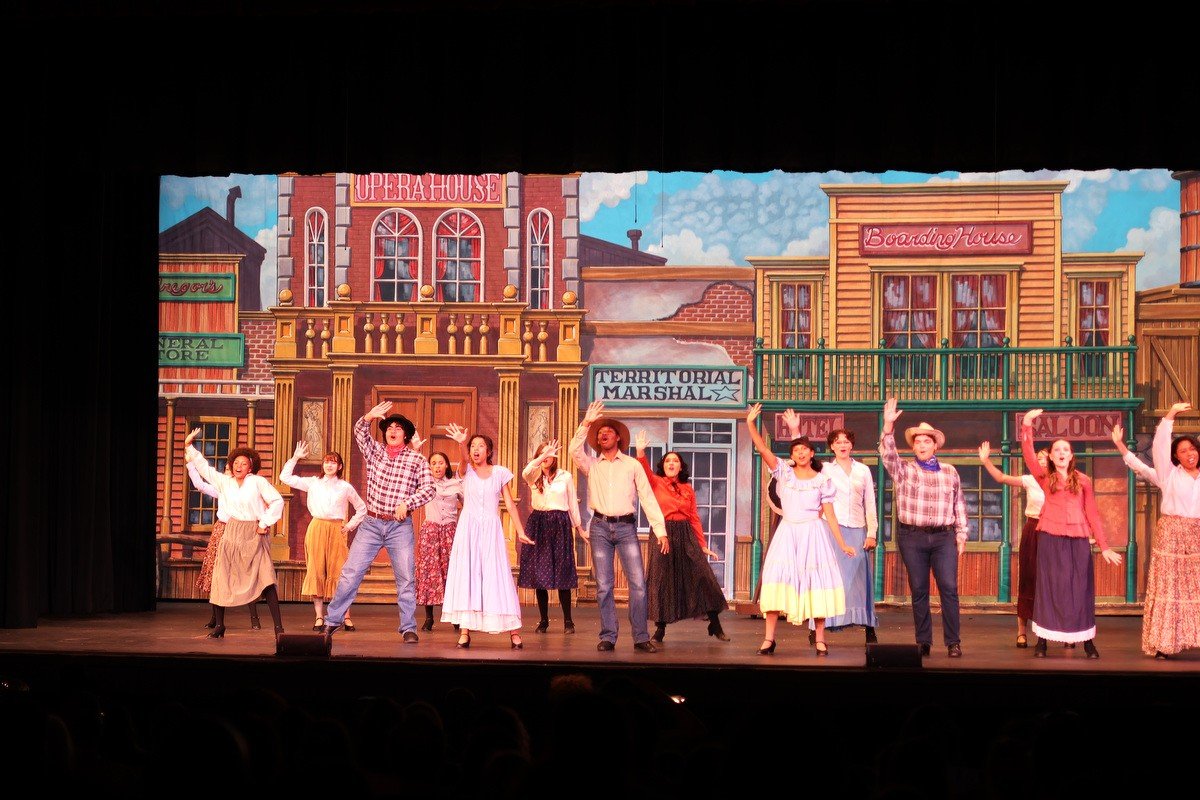
Photos by Tom Herron
The cast sings along, blissfully unaware that a murder is among its ranks.
By Tom Herron
Redlands News Collective
REDLANDS, Calif. — The year is 1959. The stage is set at Boston’s Colonial Theatre, and the stakes are higher than a leading lady’s vocal range. But this isn't just any opening night; it’s a Kander and Ebb musical comedy where the star mysteriously drops dead during the curtain call. With a sharp book by Rupert Holmes and a score that echoes the legendary brilliance of Chicago and Cabaret, “Curtains” was a high-stakes "whodunit" that concluded last weekend at Redlands High School.
The Return of the "Pit"
While the on-stage drama follows a musical-theatre-loving detective trying to crack the case, the real heart of this production beats beneath the stage. Brandon Hansen, a Redlands High alumnus who has returned as his alma mater’s music director, has championed a return to the classic "pit" orchestra. In a town where local theater giants like Kent Hayworth have long fostered a love for the craft, Hansen is ensuring that the musical tradition remains as versatile and vibrant as ever.
This isn't just a band; it's a "finely tuned machine." The Redlands High pit consists of a tight-knit group of musicians who do more than just play notes. Many are "triple threats" in their own right — swapping between multiple instruments while simultaneously providing the background cheers and heckling that bring the 1950s Boston atmosphere to life.
A Legacy of Variety
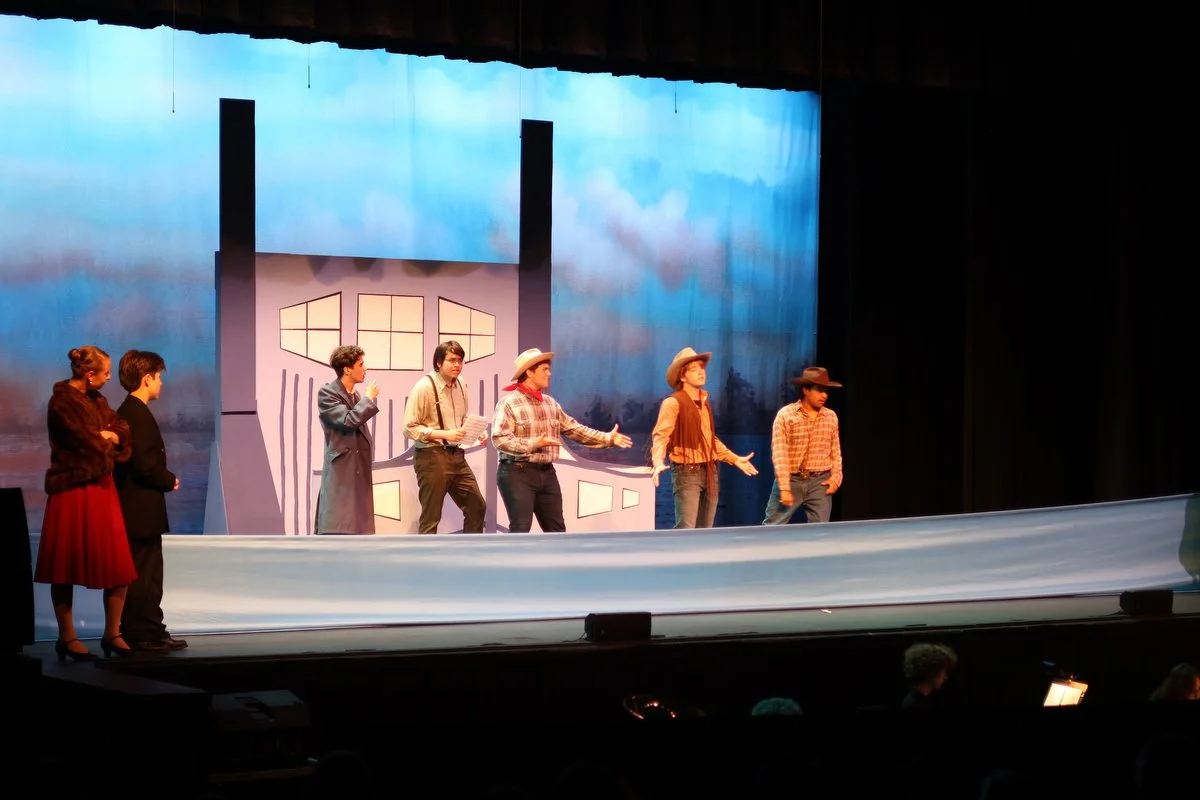
Photo by Tom Herron
Characters Randy Dexter, Bobby Pepper and Aaron Fox (played by Mya Gellman, Rylan Bottger and Daxx Williams, respectively), sing “In the Same Boat.”
The spirit of “Curtains” — with its brassy energy and comedic timing — was a natural fit for Redlands. The community has a long history of variety shows and musical spectacles, particularly through the legacy of venues like the Clock Theater, which historically leaned into the joy of live pit music and ensemble-driven humor.
The production even nods to the era of the late 1940s and 50s, channeling the same playful energy found in the hits of the Andrews Sisters. From the rhythmic swing of "Boogie Woogie Bugle Boy" to the localized charm of "The Lady from 29 Palms," that vintage California-meets-Broadway vibe is woven into the very fabric of the show.